
 R.
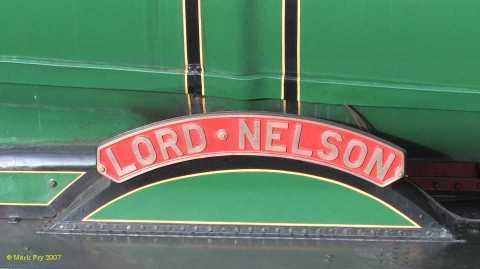
E. L. Maunsell designed the Lord Nelson class 4-6-0 locomotives to haul
500 ton trains, such as The Golden Arrow and The Bournemouth Belle, at
an average speed of 55 mph, yet keep within the Southern Railway's 21 ton
axle-weight limit. When no. 850 Lord Nelson was introduced in August 1926,
it was the most powerful passenger locomotive in Britain with a tractive
effort of 33,510 lb, a fact which the Southern Railway publicity department
made much of. The story goes that this irritated the Great Western Railway
board so much, they commissioned Collet to build his King class. On the
other hand, Fowler at the LMS was so impressed that he asked for copies
of the blue-prints. Maunsell, flattered, obliged and the result was the
Royal Scot class.
R.
E. L. Maunsell designed the Lord Nelson class 4-6-0 locomotives to haul
500 ton trains, such as The Golden Arrow and The Bournemouth Belle, at
an average speed of 55 mph, yet keep within the Southern Railway's 21 ton
axle-weight limit. When no. 850 Lord Nelson was introduced in August 1926,
it was the most powerful passenger locomotive in Britain with a tractive
effort of 33,510 lb, a fact which the Southern Railway publicity department
made much of. The story goes that this irritated the Great Western Railway
board so much, they commissioned Collet to build his King class. On the
other hand, Fowler at the LMS was so impressed that he asked for copies
of the blue-prints. Maunsell, flattered, obliged and the result was the
Royal Scot class.
The class was not an unqualified success. They were difficult to fire, with a very long firebox, and inexperienced fireman could get into a lot of trouble. In his excellent book "Arthurs, Nelsons and Schools At Work" (Ian Allen, 2nd edition, 1983), S. C. Townroe says
"If the fireman was unable to shoot shovelfuls of coal to the far front of the box, two things happened: the unfed areas of the grate would burn thin and large volumes of cold air would be drawn in, and coal which fell short of its intended place would form a high ridge across the middle of the grate, to add further to the difficulty of hitting the front."The design of the copper firebox tubeplate and the steel throatplate, at the junction of the firebox and boiler barrel, meant that the Nelsons were prone to stress cracks and leaking tubes, and these problems were exacerbated when poor firing let large amounts of cold air into the front of the box. However, as Townroe says, "with competent firing and careful boiler maintenance, the Nelson was a first-class locomotive, capable of keeping the faster schedules with ease."
Perhaps the most distinctive feature of Lord Nelson's design is the
arrangement of the crank axle: the cranks are set at 135 degrees so that
the four cylinders produce eight "beats" per revolution. (The more usual
arrangement is to set the cranks at 90 degrees to give 4 beats per revolution.)
This arrangement gives a much more even draft over the fire, reduces stresses
in axleboxes and the motion generally and, most importantly, reduces hammer-blow
to a minimum and hence does less damage to track and bridges. When combined
with the multi-jet blastpipe and wide chimney fitted by Bulleid, the 8-beat
arrangement makes Lord Nelson a remarkably quiet engine, when compared
to her GWR and LMS peers. Do not be deceived into thinking that she is
weak because of this! 850 is more than a match for a Castle, a Royal Scot
or even a Princess!
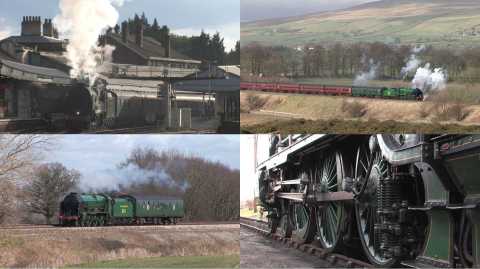
All 16 members of the class were withdrawn during 1961 and 62, and
all but one, class pioneer 850 Lord Nelson, were scrapped. 850 joined the
National Collection and eventually found her way to Steamtown, Carnforth.
She returned to steam in May 1980, just in time to take part in the Rocket
150 Cavalcade at Rainhill. In the following years, she worked many mainline
tours in the north of England and over the Welsh Marches route. Writing
in 1983, Townroe describes how she had "cheerfully taken 500 ton trains
over the Settle & Carlisle line" and "earned itself an excellent reputation".
However, as repairs became needed and Steamtown changed from a tourist
attraction to a railway maintenance works, 850 was put to one side and
largely forgotten about until the Eastleigh Railway Preservation Society
approached the National Railway Museum with a proposal to restore her for
main line work. The full story of that restoration will be told by ERPS
member Brian Southon on another DVD. I'm sure details will be posted on
the ERPS web site when that is ready, and I'll include a link here.
In August 2006, 80 years after she was built, and a few weeks after she was renamed by HRH The Princess Royal, 850 left Eastleigh Works in light steam, towed by an EWS diesel, bound for the West Somerset Railway for running-in and a staring role at their Autumn Steam Gala. At the end of the year, she moved the the East Lancs Railway in preparation for a main line test run, which finally happened on March 7th 2007 (after another Steam Gala appearance, at the ELR). Her first public main line tour was "The Trafalgar Express" from Minehead to Eastleigh on 31st March. On July 8th she worked The Southern Sunset from Waterloo to Salisbury, Honiton, Exeter and Bristol, returning via Salisbury. Sadly, a partly collapsed brick-arch in the firebox lead to long delays at Exeter and eventual withdrawal at Westbury, but not before she had posted exceptional performances climbing Honiton and Whitewall banks. She was repaired in time for her next tour to Folkestone Harbour at the end of the month. Her 11th main line tour of the year, to Weymouth on 15th Aug., was to be her last (for the time being). Firebox problems were found during a routine inspection the next day and she was withdrawn for repairs. At the end of October she was moved by road from Old Oak Common to the NRM at York, and work commenced at the end of November to strip the boiler for a thorough inspection.
Because this is a joint production, we are charging a fixed price for this programme: £10, of which £3 will cover the cost of materials and p&p. The rest will go to the Eastleigh Railway Preservation Society.
Please send a cheque (in Sterling drawn on a UK bank) or UK Postal Order, payable to Mark Fry to this address:
Steam Age PicturesNB: Don't forget to include your name and address, so that I can send you the programmes, and a phone number or e-mail address, so that I can contact you if necessary.
40 St Giles
Bletchingdon
KIDLINGTON
Oxon
OX5 3BX
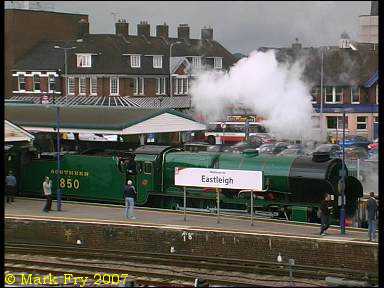 |
Wednesday 16th August 2006.
Prologue: Leaving Eastleigh Works in light steam, towed by an EWS diesel, bound for the West Somerset Railway. (2:20) Shot on an older camera, hence the extra black bars either side of the image. |
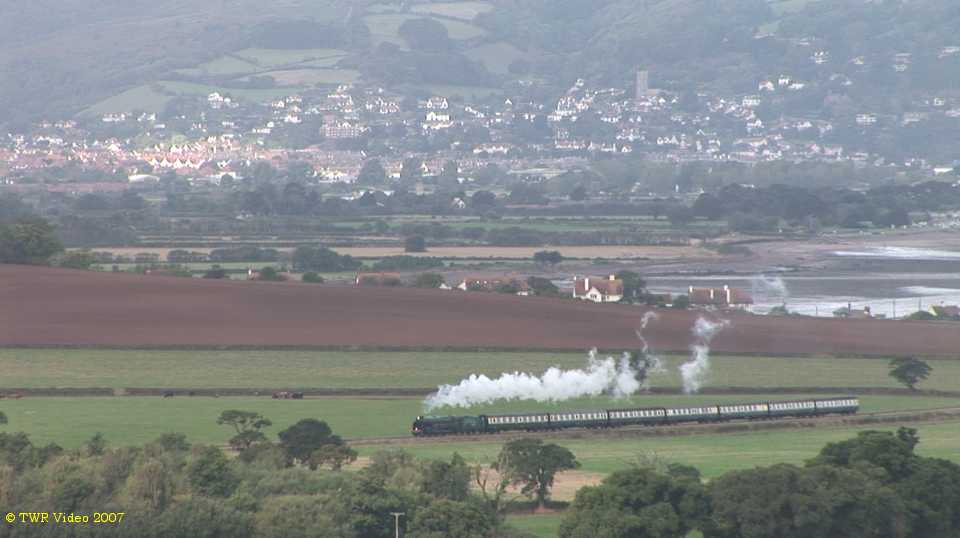 |
Saturday 7th October 2006.
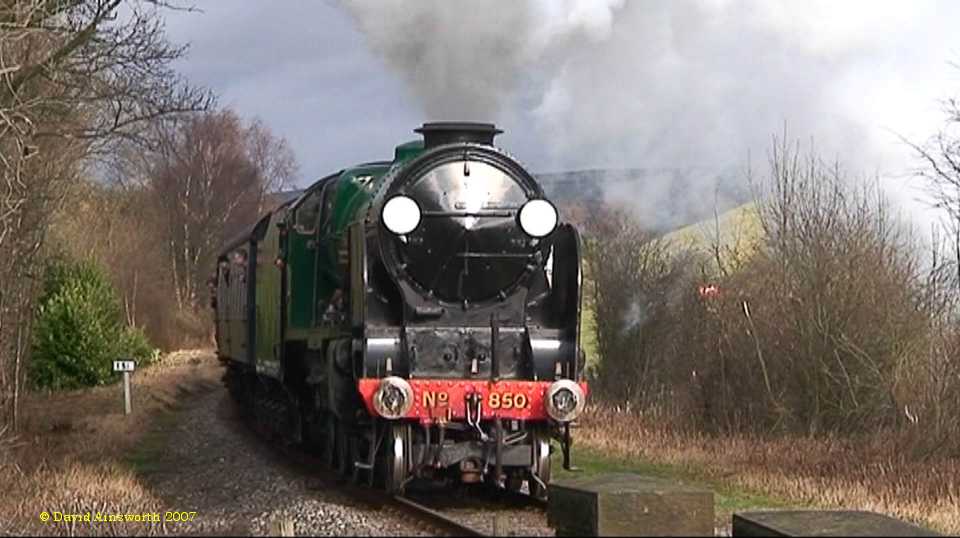
West Somerset Railway, Autumn Steam Gala. Old Cleeve, Vexford, Crowcombe Heathfield. (7:08) Lord Nelson’s first public runs were on the WSR. After some gentle running-in turns, she was the star of the autumn gala. |
 |
Saturday 27th January 2007
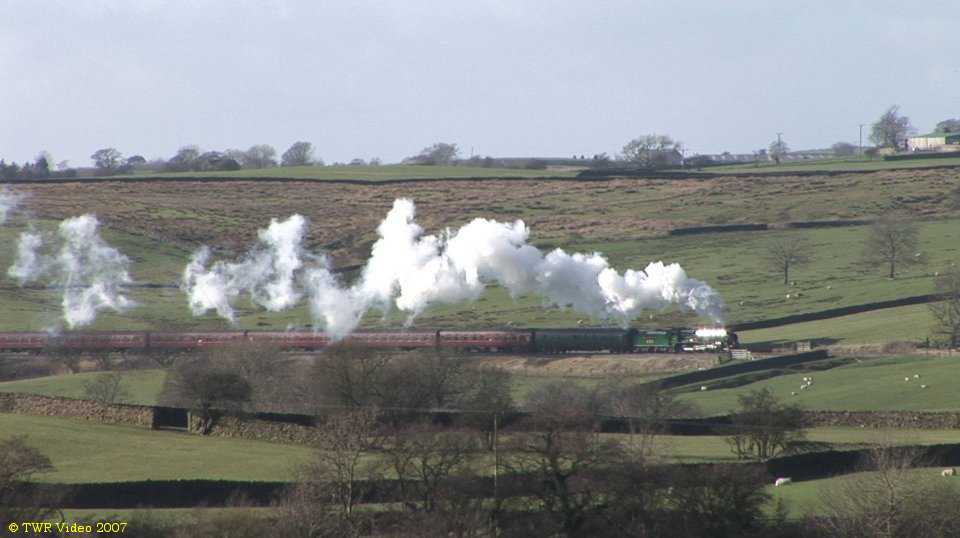
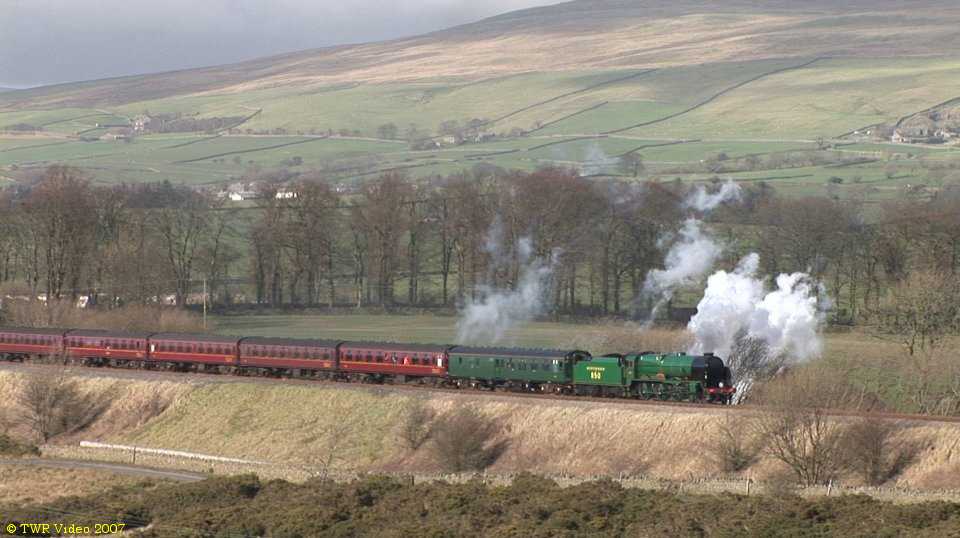
East Lancs Railway, Winter Gala. Irwell Vale, Brooksbottoms viaduct. (2:01) Whilst waiting for her test run, Lord Nelson was a welcome guest on the ELR. |
  |
Wednesday 7th March.
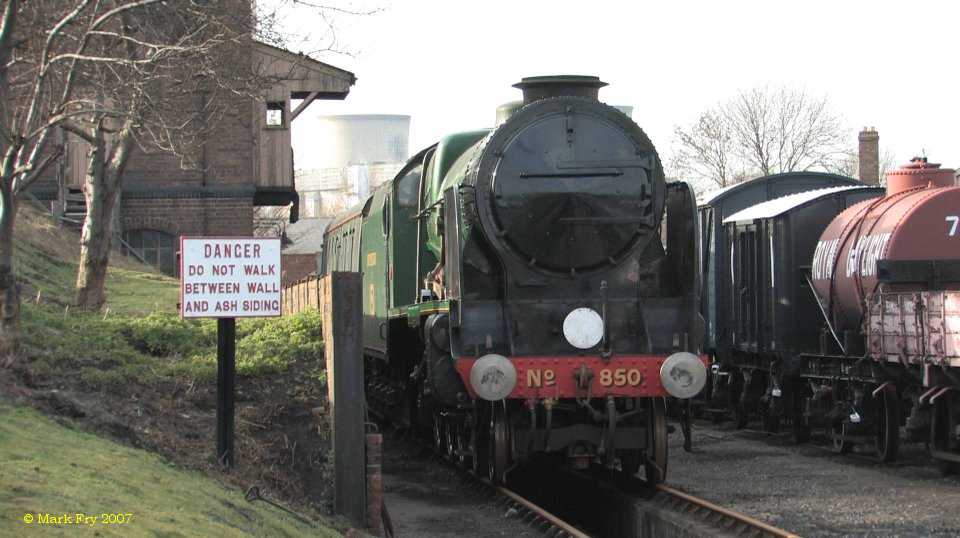
Main line test run. Carnforth - Hellfield - Preston - Carnforth. Clapham (N. Yorks.), Eldroth, Whalley. (6:06) After several postponements, 850 finally got to stretch her legs on the main line. The test run was a success. |
 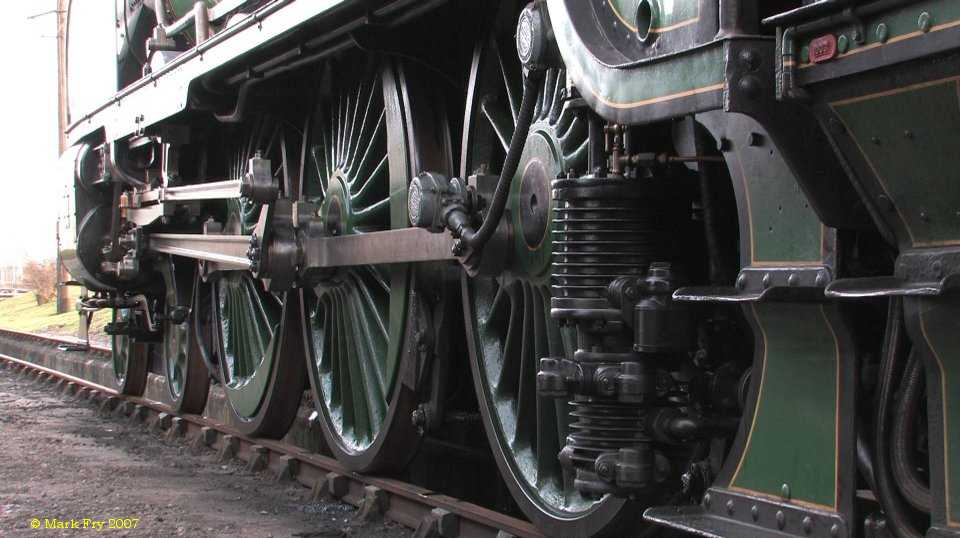 |
Saturday 10th March.
"On shed" at Didcot Railway Centre. (0:47) An unexpected stop-over at the Great Western Society’s home after her light engine move from Lancashire ran very late and the loco crew went over their hours. |
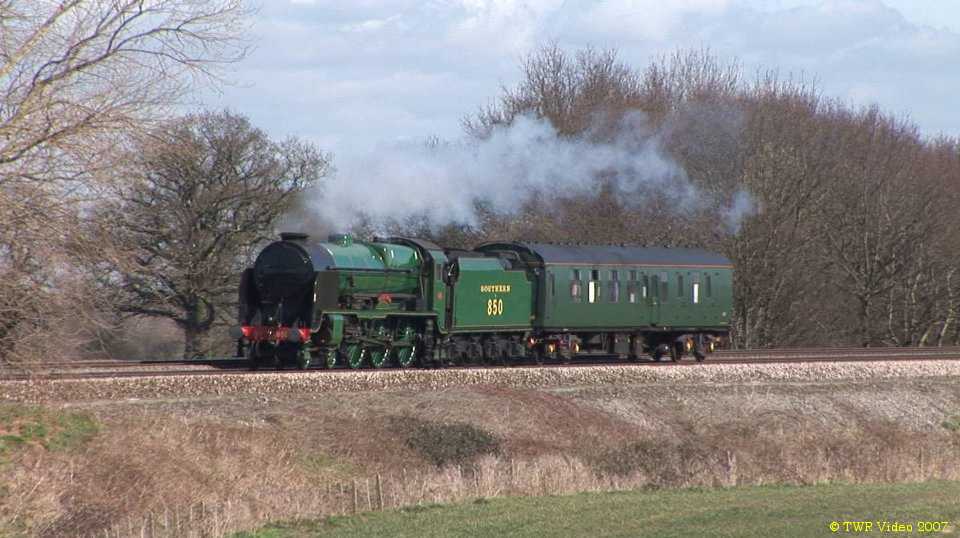 |
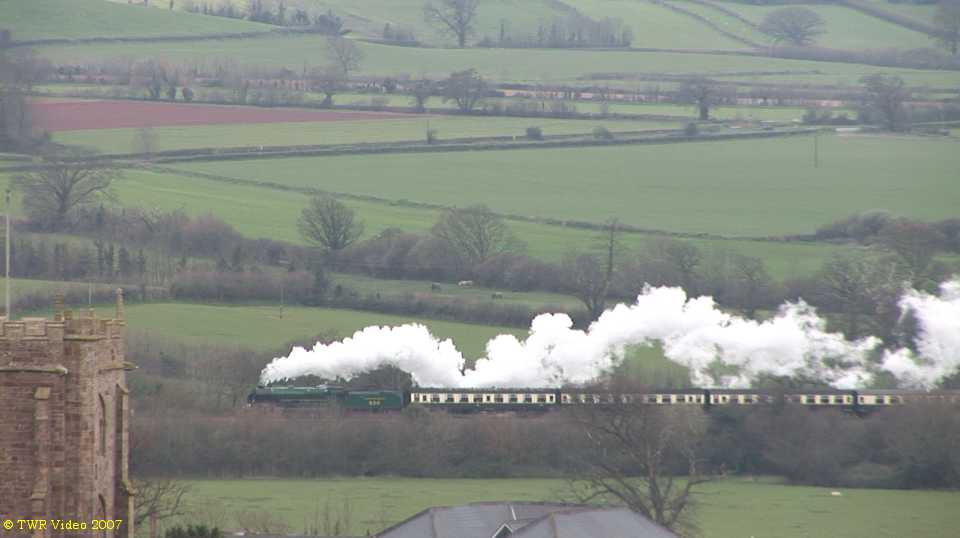
Tuesday 13th March.
Didcot - Minehead, light engine. Uffington. (1:40) With a fresh crew, 850 finally completed her journey from Bury to Minehead. |
 |
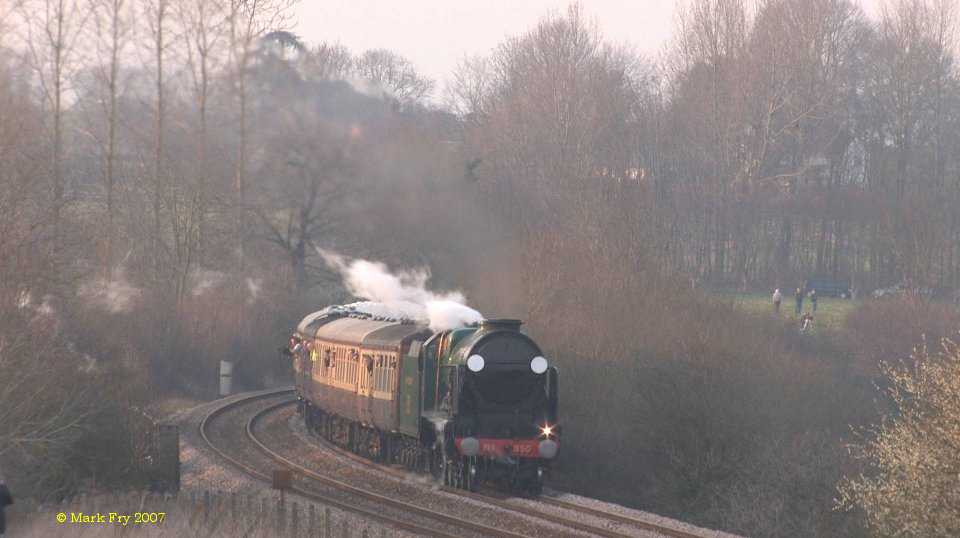
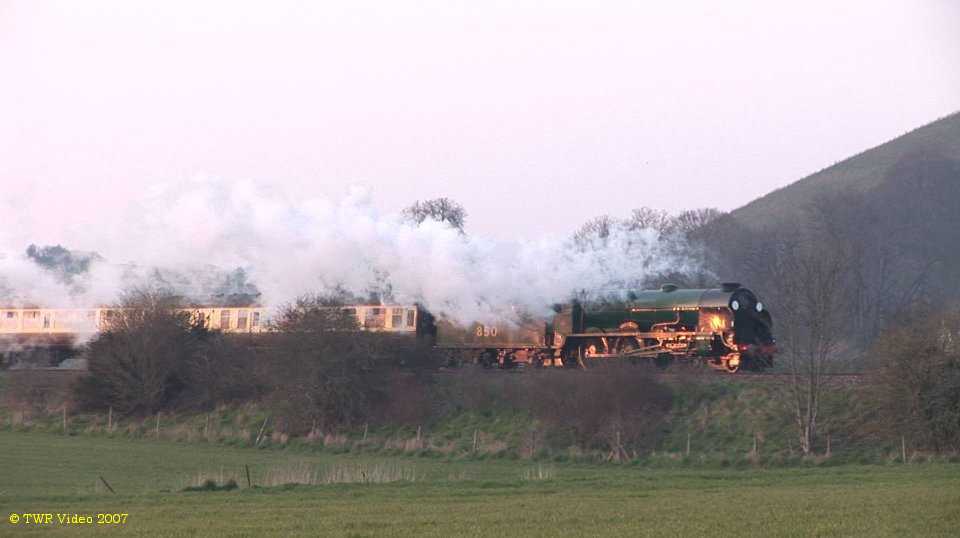
Saturday & Sunday 23rd & 24th March.
West Somerset Railway, Spring Steam Gala. Old Cleeve and Vexford - again! (5:01) |
  |
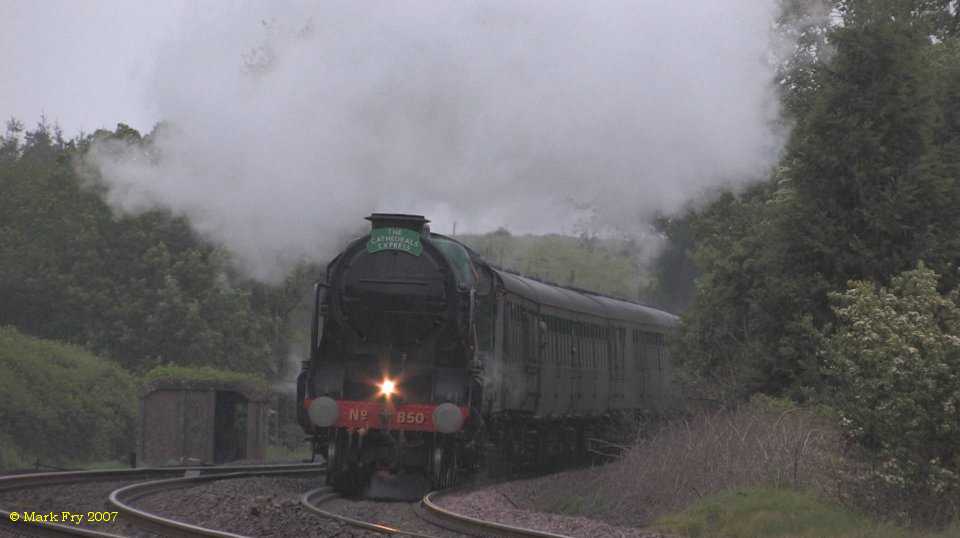
Saturday 31st March.
The Trafalgar Express: Minehead - Bristol - Salisbury - Eastleigh. Cogload Junction, Upton Scudamore and Norton Bavant. (4:00) Doing what she was built for, for the first time in a generation, 850 hauled her first public train on the mainline. |
 |
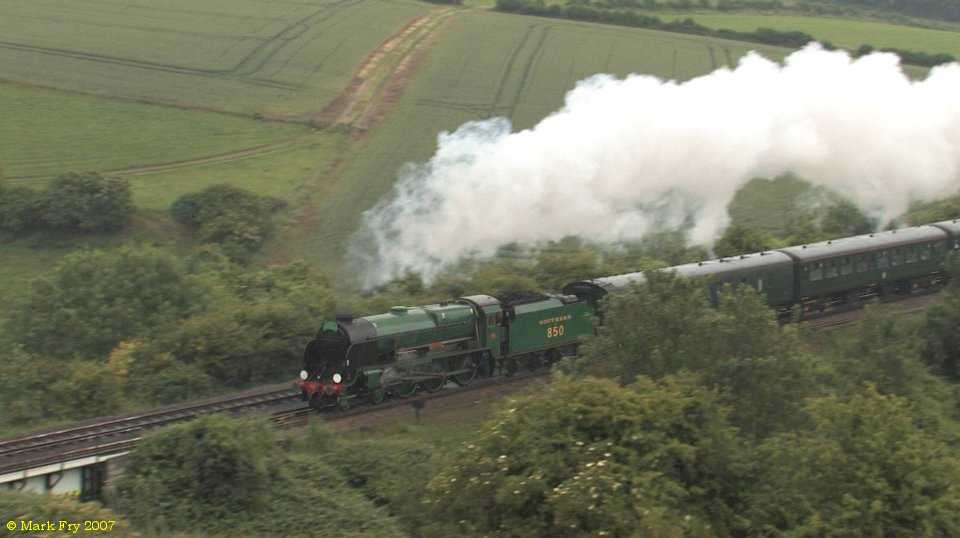
Wednesday 9th May
The Cathedrals Express: Victoria-Salisbury-Bristol and return. Andover, Bishopstrow, Upton Scudamore. (2:38) Several of 850’s tours were picked up unexpectedly after 777 Sir Lamiel suffered firebox problems. |
 |
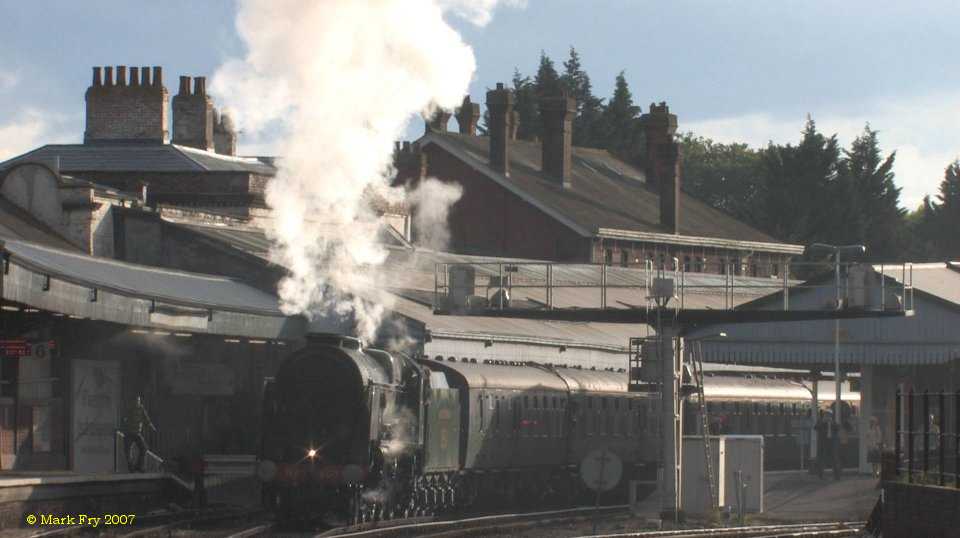
Wednesday 13th June.
The Cathedrals Express: Victoria-Salisbury-Yeovil Jc, Weymouth-Yeovil PM-Westbury, Salisbury Tunnel Jc-Victoria. Bincombe, Chantmarle, Gomeldon. (4:12) Clearance problems with the A30 bridge east of Sherborne forced a late change of route with two changes of direction, at Westbury and Lavistock. |
 |
Saturday 23rd June.
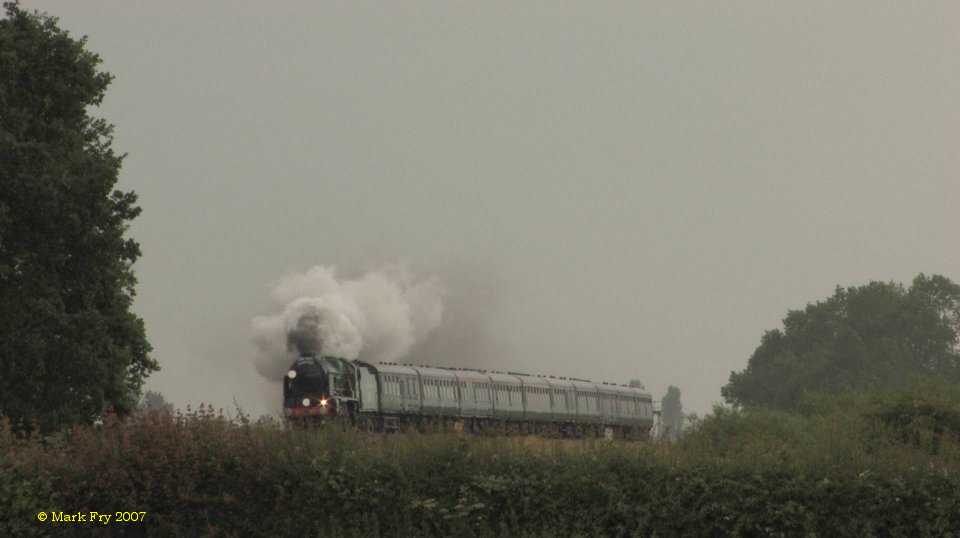
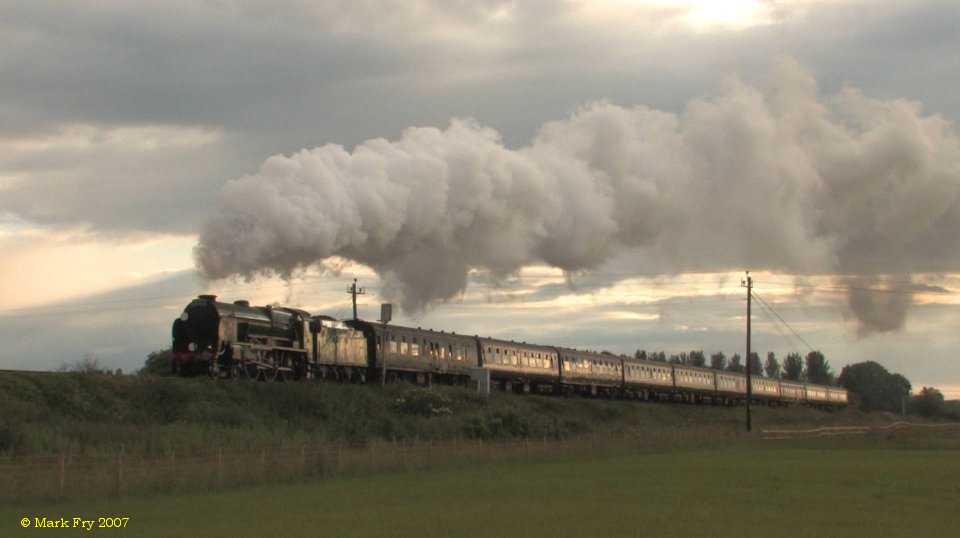
The Bath & Bristol: Haywards Heath-Hove-Salisbury-Bristol and return. Binsey, Lockerley, Little Langford, Upton Scudamore, Salisbury. (6:29) Much of the spring and early summer was blighted by wet weather. On this day our cameraman was lucky to dodge the heavy showers to see our hero in the sun five times. |
  |
Wednesday 27th June.
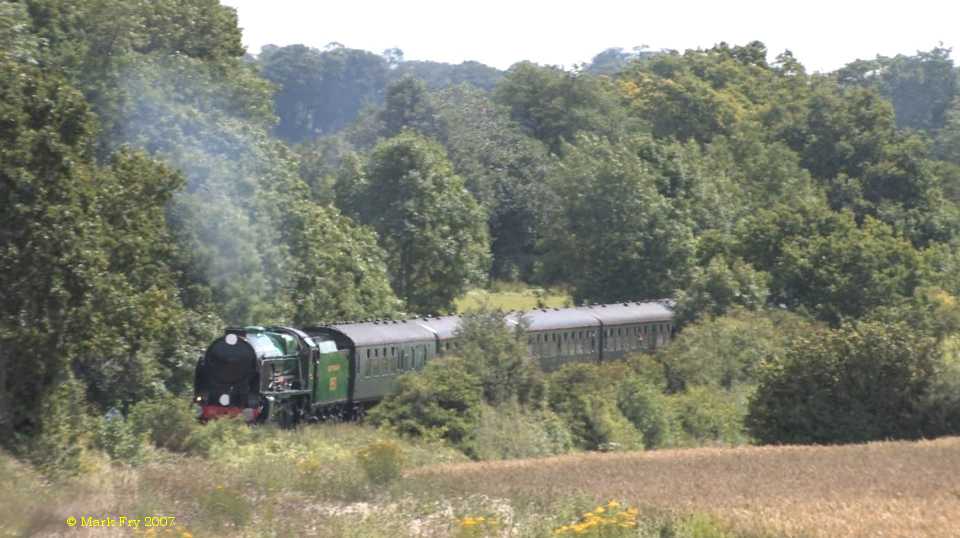
The Cathedrals Express: Victoria-Richmond-Newbury-Bristol-Swindon-Reading-Richmond-Victoria. Richmond, Aldermaston, Little Bedwyn, Dauntsey, Uffington, Wantage Rd. (6:32) Unusually, this week’s Cathedrals Express was routed via the Great Western main line on its return from Bristol. |
 |
Sunday 8th July.
The Southern Sunset: Waterloo-Wimbledon-Salisbury-Honiton-Exeter-Bristol-Salisbury-Clapham Jc. Deane, Grateley. (1:35) 40 years after the end of steam on the Southern Region, 850 was in charge of an ambitious Anniversary tour. Sadly, a part-collapsed brick arch caused long delays and eventual failure at Westbury. |
  |
Sat 28th July
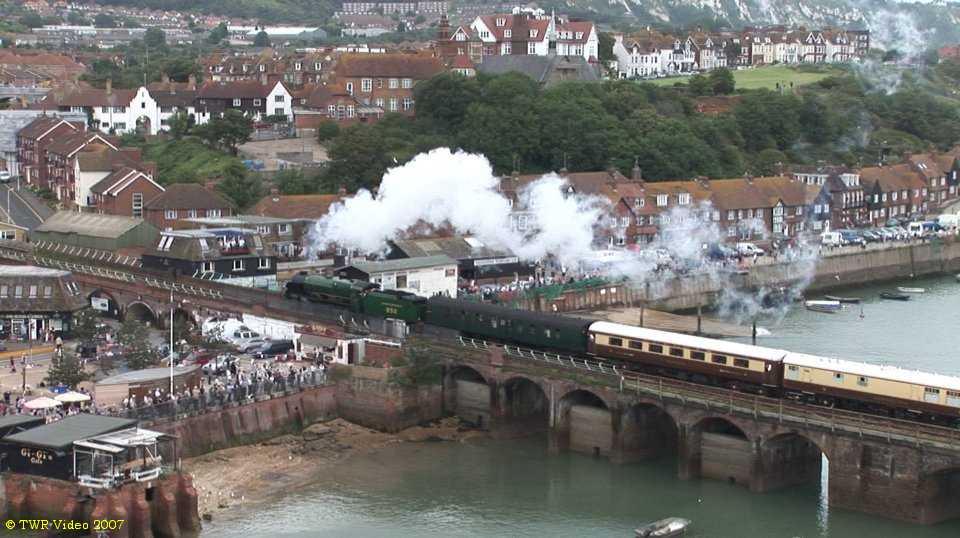
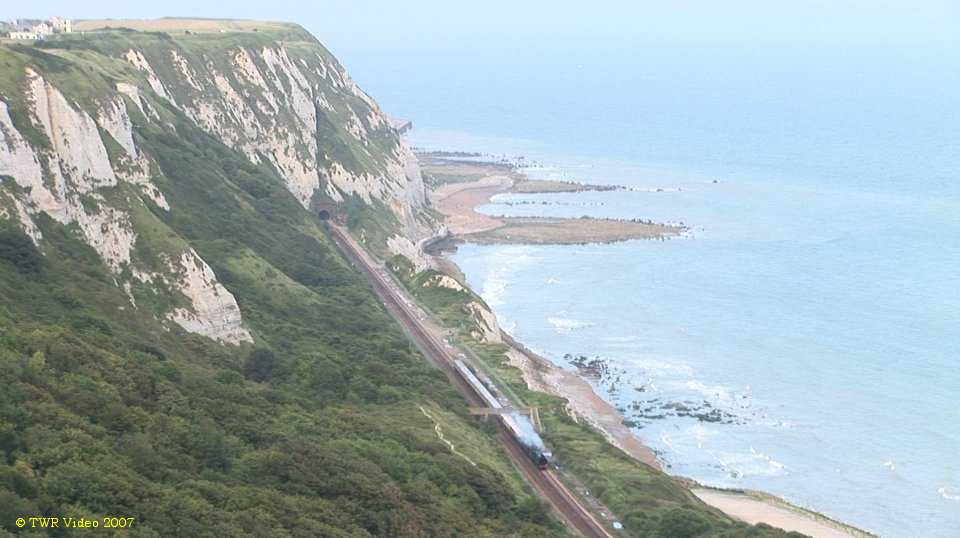
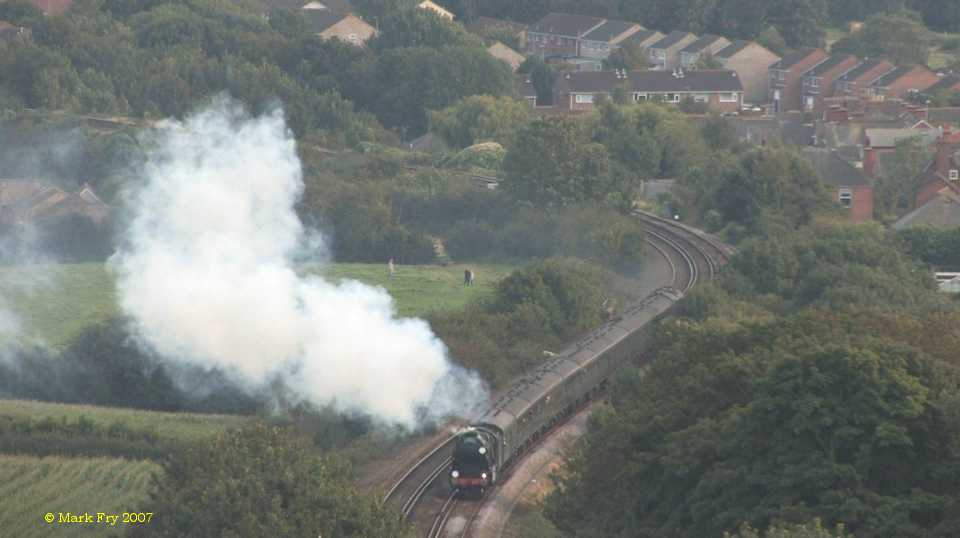
The Golden Arrow: Battersea - Tonbridge - Ashford - Folkestone East, Folkestone Harbour - Folkestone East (twice), Ashford-Canterbury W - Minster - Dover - Ashford - Tonbridge - Battersea. Orpington, Paddock Wood, Staplehurst, Folkestone, Chartham, Capel Le Ferne, Sandling. (9:21) Our cameraman talked his way onto a balcony of the hotel overlooking Folkestone Harbour. |
 |
Wednesday 15th August
The Cathedrals Express: London-Bournemouth-Weymouth and return. Bincombe, Winchester. (3:15) On a windy summer evening, we get our last view, for the time being, of Lord Nelson doing her day job. Two days later, she was withdrawn from what should have been her first VSOE charter, following the discovery of firebox problems. |
All pictures are copyright TWR Video, David Ainsworth or Mark Fry 2007.